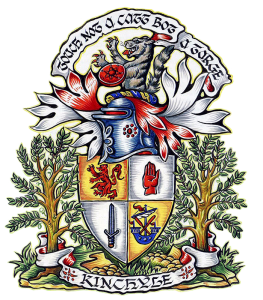
The clan’s greatest hero joins our list of chiefs
by Philip Beddows
Seanachaidh to the Chief and Clan Historian
Written for publication in ‘The Clan MacBean Register’, Fall/Winter 2020
Behind the scenes I have been quietly working away for many years researching the history of our clan and its chiefs, supported by my fellow historical travellers, principally our Acting Chief, Richard McBain of McBain and some other clansmen over here with me on the Scotland side of the Atlantic – Allan MacBain and David Geddes. It has been quite a journey that continues in earnest to uncover information of great historical interest for all of the clan, that will update and enrich our collective knowledge and understanding of our history, from the earliest times. Collectively we have scoured a huge amount of data, including original archival material that has never been referenced in the clan’s history before, and trusted secondary sources from the respected, authoritative historians of Clan Chattan, and those of other clans whose histories and archival materials are important to Clan MacBean, and refer to its chiefs.
One of many learnings we have gained is that one discovers more about our own clan by studying non-MacBean records – the dots can’t be connected if one only looks at one’s own dots; one has to look in on the clan from outside its own historical bubble. That way one can put the history of the clan in its wider context and make important links with other families which the family of our chief in particular had marriage alliances that forged entwined kin-relationships that make much more sense of the clan’s story and experience.
The most authoritative historical accounts of Clan MacBean were handed down to us by the giants of the past, most notably the distinguished Clan Chattan historians Charles Fraser-Mackintosh, author of ‘Minor Septs of Clan Chattan’ (1898) and Alexander Mackintosh Shaw, author of ‘The Mackintoshes and Clan Chattan’ (1903), which he penned under his later name of ‘A. M. Mackintosh’. Based on these histories it has been believed that in the early 18th Century the chiefship passed from William MacBean of Kinchyle to his eldest son Æneas MacBean, who left only a daughter Margaret, resulting in the chiefship and Kinchyle being inherited by Æneas’s nephew Captain Donald MacBean son of Major Gillies MacBean whose courageous death at the Battle of Culloden was immortalised by Lord Byron in one of his early poems.
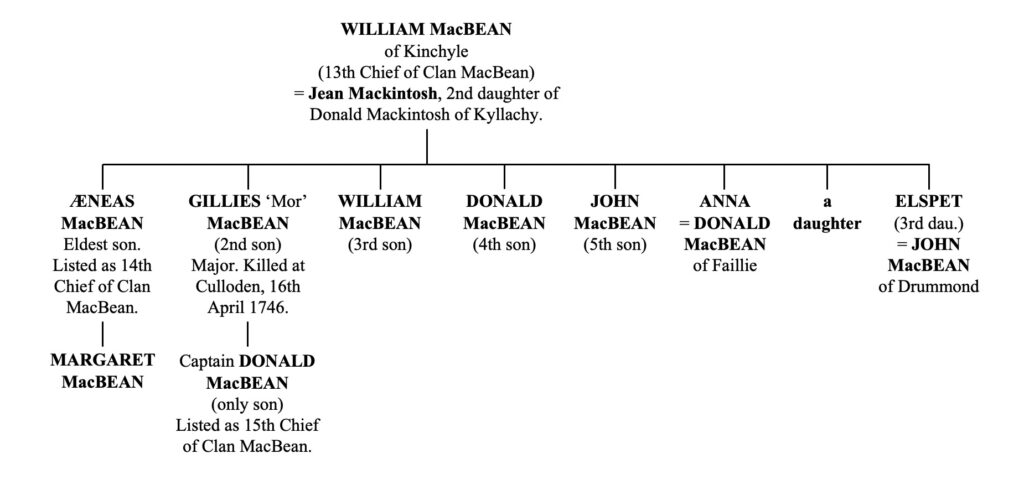
Chart 1. Lineage recorded before our new discoveries.
However, to our great surprise, this precise line of succession has now been found to be incorrect. There is not space in The Register to publish the full and extensive detail of this discovery, so this will be published soon on the Clan’s website. What follows is a summary.
An exchange with a current historian and authority on Clan MacGillivray, and re-read of the greatly respected late Robert McGillivray’s book ‘The Clan MacGillivray’ (2004), coinciding with an examination of old 17th and 18th Century Testament Datives, Testament Testamentars, EIK’s and related old papers, has led to the revelation that the order of succession of the chiefs of Clan MacBean did not follow from William MacBean of Kinchyle to his eldest son Æneas MacBean and from Æneas to his nephew Donald.
This is what actually happened:–
William MacBean of Kinchyle, 13th Chief, son of Paul MacBean.
William married Jean Mackintosh, daughter of Donald Mackintosh of Kyllachy. On 6th June 1721, he and his son Gillies were among signatories to a deed settling old boundary disputes between the MacBeans of Drummond and the Frasers of Erchite. In September 1724, the heads of families and key individuals of Clan Chattan gathered at Moy to settle a dispute between the Chief of Mackintosh and Cluny Macpherson over who was Captain of Clan Chattan. William MacBean of Kinchyle and Donald MacBean of Faillie were present, cited as among the Friends of Mackintosh who signed the final agreement that settled the matter once and for all in favour of Mackintosh. The Testament Dative of Angus McIntosh of Culchlachy, who died on 20th June 1730, was confirmed on 24th December 1736, and mentions William MacBean of Kinchyle. The Testament Dative of Farquhar MacGillivray of Dunmaglass, who died at Kinchyle in June 1740, was confirmed on 13th March 1741. It mentions the Deceast William McBean of Kinchyle in relation to a Bond that was granted to his son Gillies McBean dated 17th February 1738. This appears to suggest that William may have died sometime between 24th December 1736 and 17th February 1738. A legal case cites adjudications against ‘the representatives of deceased William and Angus McBeans of Kinchyle in 1742’, so that makes it even clearer that both William and his eldest son Æneas had died by then.
Æneas MacBean, William MacBean of Kinchyle’s eldest son.
Until now listed as the 14th Chief of Clan MacBean, but no longer recognised as such.
In 1711 he married Isobel, daughter of Roderick Mackenzie of Redcastle and his wife Margaret, daughter of James Grant of Freuchie and Mary the daughter of James Stuart, 3rd Earl of Moray. Sasine on their marriage contract was recorded in 1718. We now know for certain, from a variety of Testament Datives, particularly that of Farquhar MacGillivray of Dunmaglass that Æneas died sometime after 6th December 1720, when he is mentioned as alive, and before 18th May 1722, which is a date by which he is first mentioned as deceast. It has long been known that he left a daughter Margaret. However, we have discovered from Testament Datives that Æneas also left a son and heir, Roderick MacBean (named in honour of his grandfather Roderick Mackenzie), with (in 1728) ‘Tutors and Curators’. Æneas had been a Captain in the Mackintosh / Clan Chattan regiment, was at Preston in 1715 and imprisoned after the surrender there. Many of the officers were his cousins, including Farquhar MacGillivray of Dunmaglass, his 2nd cousin.
Roderick MacBean, son of Æneas.
Hitherto never mentioned in any history of the Clan, Roderick was heir to his father and the discovery of his existence is a big surprise. It is clear that he died young, unmarried and without children, before his grandfather William, sometime between 1728 and perhaps 1736. His sister Margaret is cited in 1765 as ‘heir of provision’ to her father Æneas.
The death of Æneas MacBean before his father William, and the death of Æneas’s son Roderick, also before William, means that the chiefship did NOT pass from William to Æneas, but from William to his 2nd son, the famous Major Gillies ‘Mor’ MacBean, who led his clan into battle at Culloden and was immortalised by his remarkable exploits and death there. Sadly for Æneas, this means he must be removed from the list of our chiefs, and be replaced by his younger brother Gillies.
Gillies ‘Mor’ MacBean, 2nd son of William MacBean of Kinchyle.
Now recognised as 14th Chief of Clan MacBean, Gillies is the most famous and celebrated member of our clan. He is our well-known hero, a giant of a man, a Major in Lady Anne Mackintosh’s Clan Chattan Regiment at Culloden, who died gallantly engaged in single combat against a troop of soldiers, 13 of whom he is said to have killed with his sword before he succumbed to superior numbers. It was this that resulted in him gaining the epithet of ‘Mor’, which means ‘the Great’, along with the need to distinguish him from the other two MacBeans called ‘Gillies’ who fought alongside him at the battle of Culloden. As new information about his father William, brother Æneas and nephew Roderick show, Gillies inherited the chiefship directly from his father William MacBean of Kinchyle. He is cited on 3rd June 1734 as Gilles McBean son to Kinchyle in Bunachton. We know that his father was still alive in 1736 and appears to have died before February 1738, and certainly before March 1741. However, despite becoming Chief in succession to his father William, Gillies was not called ‘of Kinchyle’ probably because the estate was in the hands of creditors. During his father’s lifetime Gillies had become Tacksman of Bunachton, and by the time of Culloden he was living at Dalmagerry. His tenant, who was also coincidentally called Gillies, replaced him as Tacksman of Bunachton after Culloden. Before 1740, Kinchyle was held by a wadset by his 2nd cousin Farquhar MacGillivray of Dunmaglass. Farquhar’s Testament Dative states that he died at Kinchyle house itself. When Gillies died at Culloden, the chiefship passed to his son Donald. Charles Fraser-Mackintosh, in his ‘Antiquarian Notes’ tells us that after Gillies’ death, Donald Macbean was afraid to serve heir, and an attempt to make up a title by Trust Bond and adjudication in favour of Lieutenant Alexander Macbean, sometime of the Regiment of Foot commanded by Lord John Murray, a cousin of Donald’s, failed.
Captain Donald MacBean of Kinchyle, son of Gillies. 15th Chief of Clan MacBean.
Donald succeeded as Chief after his father’s death at Culloden on 16th April 1746. He had been with his father at the battle, escaped and surrendered. He was likely imprisoned at the time his father’s Testament Dative qua creditor was compiled (dated 29th October 1746), as he is not party to it and nor was he mentioned within it. In July 1747, he was an officer in Lord Drumlanrig’s Regiment, raised for service with the States General in the Netherlands. By 1756 he was an Officer in Fraser’s Highlanders. He went to Canada and took part in the battles of Quebec. He was listed as one of the officers wounded at the battle of Sainte-Foy on 28th April 1760. In 1759, his representatives (his 2nd cousins, the brothers Captain Lieutenant Forbes MacBean & William MacBean Attorney-at-Law in London, sons of Reverend Alexander MacBean of Inverness) procured his service as heir-male to his uncle Æneas, and then sold Kinchyle the next year. It is likely that Donald being served as heir to his uncle is what has distracted historian’s eyes away from the fact that his uncle Æneas had died before his own father William, and thus led to the conclusion that the chiefly succession passed directly from Æneas to his nephew Donald, when in fact it passed from Æneas’s father William to Gillies, and then on to Donald.
Donald died before 22nd September 1792, leaving two daughters by his marriage to his cousin Anne, 2nd daughter to James Mackintosh of Woodend and Kyllachy. The succession passed to William McBean in Pittourie in the parish of Alvie, Badenoch, son of Donald’s 1st cousin Farquhar McBean. William emigrated with his family to Glengarry in Ontario, Canada, and is the ancestor of our current Chief James McBain of McBain.
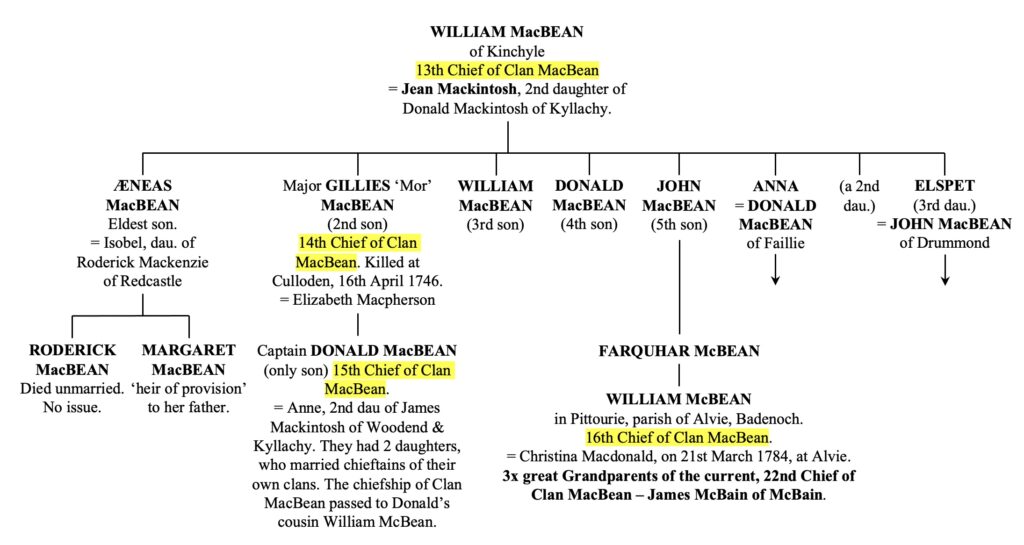
Chart 2. Lineage showing changes since our new discoveries.
As a result of these discoveries, a new pedigree of the chiefs of Clan MacBean will be published on the Clan website, with an extended version of this article.
Written for publication in ‘The Clan MacBean Register’, Fall/Winter 2020.
New discoveries on the lineage of the Chiefs of Clan MacBean – Philip Beddows, Oct 2020
First published in The Register, Fall–Winter 2020.